

To decide between home-based hospice and an inpatient facility, families must evaluate the patient’s clinical stability and the primary caregiver’s physical capacity. Home-based care is ideal for those who prefer a familiar environment and have a strong support system, while an inpatient facility is necessary when acute symptoms, such as uncontrolled pain or respiratory distress, require 24/7 professional clinical monitoring.
Navigating the Crossroads of End-of-Life Care
Choosing where a loved one receives their final stage of care is a profound responsibility. Hospice is not a “white flag” of defeat; it is a tactical shift from aggressive, often painful curative treatments to a strategy centered on quality of life and comfort. For many families, this decision comes down to the intimacy of a private residence versus the high-intensity resources of a clinical center.
Deciding on the right path requires looking past the emotion of the moment to the reality of daily needs. Whether you are currently researching hospice care in Bridgeton or are just starting to explore options for a relative, the goal is the same: providing a safe, stable, and dignified environment.
Comparing Care Environments: A Side-by-Side Analysis
While both settings offer an interdisciplinary team, nurses, social workers, and spiritual counselors, the logistics of who handles the “heavy lifting” differ significantly.
| Feature | Home-Based Hospice | Inpatient Hospice Facility |
| Primary Setting | The patient’s long-term residence. | A specialized clinical unit. |
| Primary Caregiver | Family members or hired aides. | Professional nursing staff. |
| Medical Supervision | Scheduled visits with 24/7 on-call. | Constant 24/7 on-site clinical care. |
| Environment | Private and highly familiar. | Structured for safety and intervention. |
| Symptom Management | Oral or topical medications. | IV titration and acute monitoring. |
4 Critical Factors for Decision Making
If you are currently assisting a loved one, use these four benchmarks to guide your choice. During a recent audit for a family in Bridgeton, NJ, we found that identifying the “Symptom Ceiling” early on helped prevent an emergency crisis during a weekend when local pharmacies were closed.
1. Clinical Complexity
Certain conditions require equipment or medication adjustments that are difficult to manage in a standard bedroom. If the patient requires frequent IV adjustments or high-flow oxygen that a home concentrator cannot sustain, an inpatient facility is the safer choice.
2. Caregiver Capacity
Home hospice relies on a “Primary Caregiver”, often a spouse or child. This person manages daily medications and hygiene between nursing visits. If the caregiver is physically unable to lift the patient or is reaching a point of total exhaustion, the facility provides necessary professional relief.
3. The Physical Environment
Is the home set up for medical care? Consider if a hospital bed can fit in the room or if the bathroom is wheelchair accessible. For those receiving Hospice and Palliative Care in Bridgeton, our team performs safety assessments to determine if the home can truly support the patient’s needs.
4. Patient Preference
Some individuals find peace in their own beds, surrounded by their own belongings and pets. Others feel like a “burden” to their families and find security knowing that professionals are managing their physical symptoms around the clock.
Applying Our Proprietary Approach to Solve This
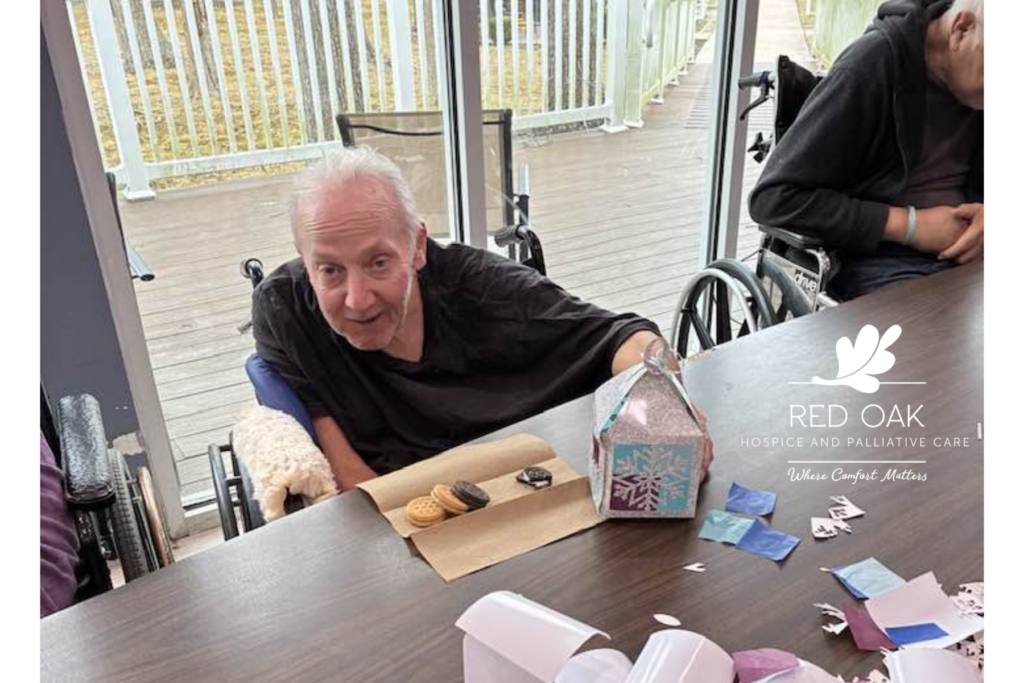
At Red Oak, we don’t believe in a one-size-fits-all approach to end-of-life care. We believe in the strength of the individual, the significance of family and friends, and the value of respect and dignity that everyone deserves. Our goal in Red Oak is to create a positive difference every day and to create memorable moments that will enrich your life.
To achieve this, we utilize a specialized model of care that accommodates a full range of nursing needs, all with exceptional care and expertise. Our highly qualified nurses regularly update their skills through specialized training and continuous education classes. Their knowledge and experience enable them to accurately identify each patient’s needs, whether they are in a private residence or a facility.
The Red Oak team works closely with families, physicians, hospitals, and social service agencies to arrange for smooth and orderly transitions. Whether you are transitioning from a hospital stay to Bridgeton hospice care or moving from home to an inpatient unit for symptom stabilization, our method ensures that the “human” element of care is never lost in the clinical details.
Debunking the “Facility Means the End” Myth
A common misconception in this industry is that an inpatient facility is a “one-way street” reserved for the final hours of life. This myth often prevents families from seeking the help they need when symptoms become unmanageable.
The Reality: Inpatient hospice care is often used for “General Inpatient Care” (GIP) to stabilize acute symptoms. Once the patient’s pain is under control, many return to their homes to continue their journey. Furthermore, “Respite Care” allows a patient to stay in a facility for up to five days to give the family caregiver a break. Using a facility is a tool for better care, not a sign that “it’s over.”
The Benefits of Each Care Path
The Virtues of the Home Setting
For many, the home is a sanctuary. We see how much comfort a patient derives from having their grandchildren visit without hospital-imposed “visiting hours” or the noise of a clinical hallway.
- Unmatched Privacy: Conversations happen in the sanctity of the home.
- Pet Presence: A loyal pet can provide more comfort than any medication.
- Autonomy: The patient maintains control over their daily rhythm.
The Virtues of the Inpatient Facility
Conversely, a facility offers security that home care cannot always match.
- Professional Buffer: Family members can return to being “daughters” or “sons” rather than “nurses.”
- Immediate Intervention: Pain spikes are addressed in minutes by on-site staff.
- Specialized Resources: Access to specialized mattresses and 24-hour monitoring.
Frequently Asked Questions
Does Medicare pay for both home hospice and inpatient facilities?
Yes, the Medicare Hospice Benefit covers both. However, while it covers 100% of the medical care, it may not cover “room and board” for long-term residential stays unless the patient meets clinical criteria for acute symptom management.
Can I change my mind once hospice starts?
Hospice is a choice. You can transition from home to an inpatient facility if symptoms escalate, and you can even revoke the hospice election if you choose to pursue curative treatment again.
How do I know if we need palliative care instead?
While hospice is for those with a life expectancy of six months or less, palliative care in Bridgeton is available at any stage of a serious illness. Palliative care can be provided alongside curative treatments to manage pain and side effects.
What is the role of the hospice nurse in a home setting?
The nurse acts as a case manager, visiting regularly to assess the patient and teach the family how to provide daily care. They are the primary link between the patient and the physician.
To Sum Up
We understand that this journey is about more than just medical management; it is about honoring a life well-lived. By providing Hospice & Palliative Care in Bridgeton, NJ, we ensure that our neighbors receive the expertise they need with the compassion they deserve.
Our team is ready to help you navigate these choices, ensuring a transition that prioritizes the patient’s comfort and the family’s peace of mind. Let us help you create a care plan that respects your loved one’s dignity.
Are you ready to discuss the best care path for your family? Contact the Red Oak Team today to schedule a consultation and experience the difference that expert, compassionate hospice care can make.